Why Does Your Cat Suddenly Care About a Closed Door?
There's something about a closed door that can make a perfectly content cat suddenly very interested in getting through it. This isn't necessarily about wanting what's behind the door, but often about access and choice for your feline friend.
There’s something about a closed door that can make a perfectly content cat suddenly very interested in getting through it.
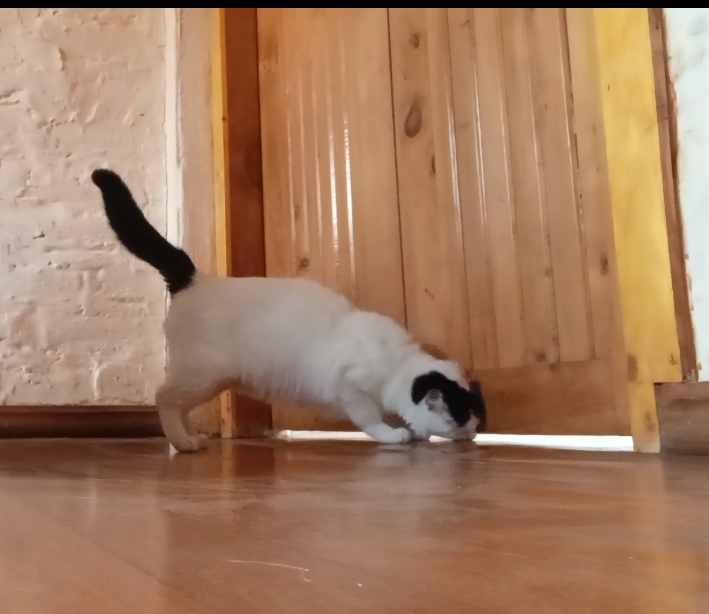
You may have seen this yourself. Your cat was doing absolutely nothing on the other side of the room, but the moment you close a door, she’s at it — pawing underneath, meowing, or waiting outside for you to open it.
This isn’t necessarily about wanting whatever is behind the door. Sometimes it’s about access and choice.
Cats generally have a lot of information available to them about their environment. They can move from room to room, investigate smells and sounds, check on people and other animals, and choose where they want to spend their time. Closing a door changes that suddenly.
There may also be something interesting happening on the other side. If you’re in the room, your cat may want access to you. If another pet is behind the door, that can be even more motivating. And if the door is normally open, the sudden change itself can be enough to get your cat’s attention.
If a door needs to stay closed, I don't recommend simply trying to make your cat stop caring about it. Instead, think about why your cat wants access in the first place.
Is she looking for you? Is there another animal on the other side? Is she curious about a new sound or smell? Does she normally use that room as part of her territory?
Once you understand the motivation, it becomes much easier to decide what might help.
Sometimes that means providing attention or enrichment elsewhere. Sometimes it means changing the environment. And sometimes the best solution is simply helping your cat get used to a predictable new routine.
A closed door can look like a very small thing to us. To a cat, it can represent a pretty significant change in how she can move through and interact with her environment.
Share this post
Comments (0)
Sign in to leave a comment.
Sign InLoading comments...
More from Felidae Behavior Consulting
Ready to work with Felidae Behavior Consulting?
Get in touch today for a free consultation.
Submit an Intake Form