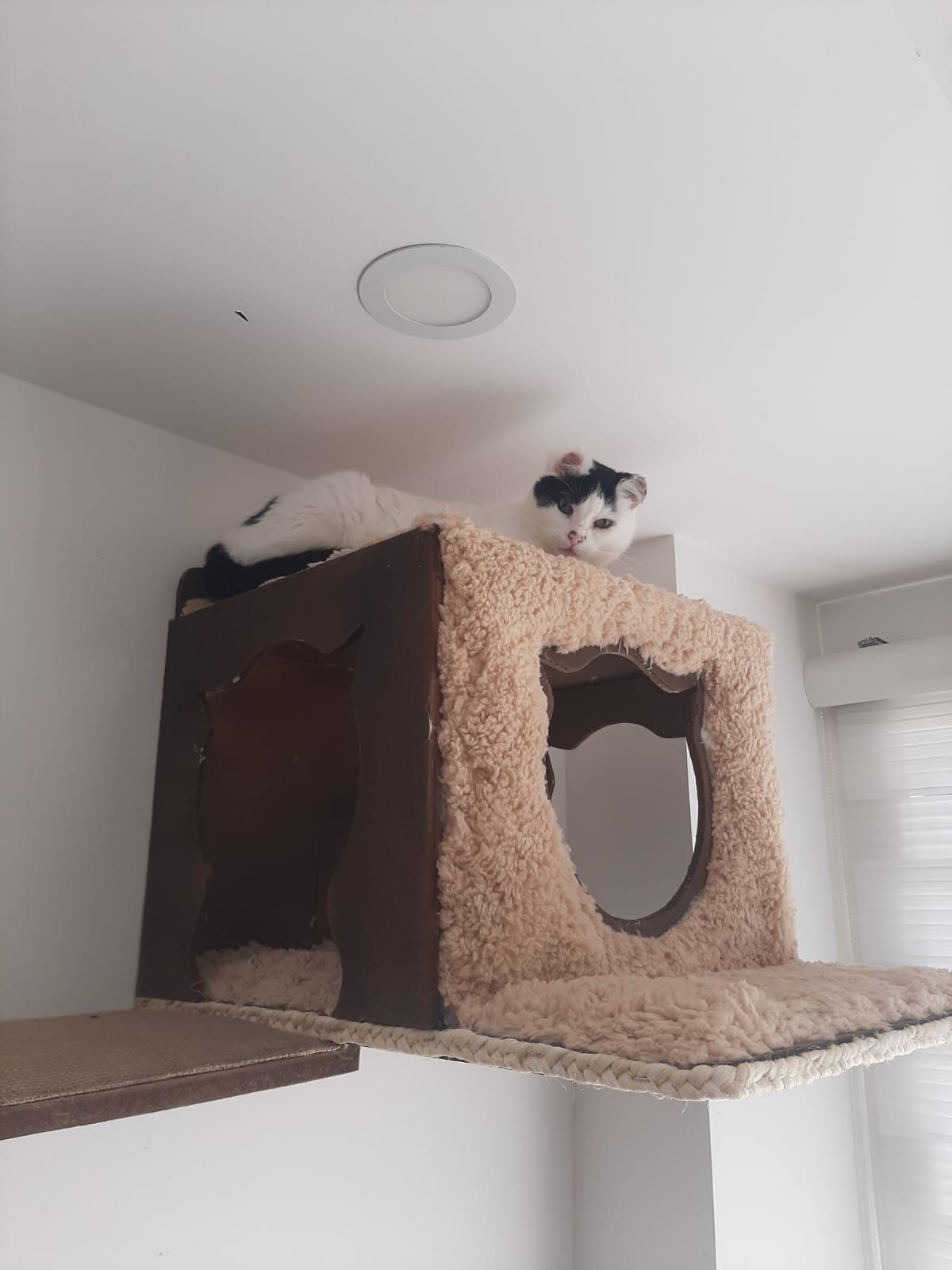
Why do cats like heights? Not every cat does!
Cats live in three dimensions, so offering vertical space is often recommended for a cat-friendly home. But not every cat wants to be up high, and understanding individual preferences is key.
Cats live in three dimensions, so when I’m helping someone create a cat-friendly home, I usually recommend offering some vertical space. But there’s a little more to it than just buying a tall cat tree.
I use the terms “tree dweller” and “bush dweller” when I talk with clients about how their cats seek safety. It’s a useful way to think about individual preferences.
A tree dweller tends to feel safer when they can get up high. They might jump onto a bookcase, climb to the top of a cat tree, or find a high shelf when something makes them uncomfortable.
A bush dweller is more likely to seek safety by getting underneath or inside something. They might hide under the bed, tuck themselves into a covered cat bed, or find a quiet corner where they feel sheltered.
Neither preference is better than the other. They just tell us something about what helps that particular cat feel secure.
Why do cats go up high?
Cats are predators, but they’re also prey. Being elevated can give them a better view of their surroundings and a sense of control over what’s happening nearby.
Think about a cat watching a room full of unfamiliar people. All those moving feet can feel pretty intimidating. A high perch gives the cat a place to observe without having to be in the middle of the activity.
Some cats also seem uncomfortable crossing an open floor. Elevated routes can give them another way to move through a room while feeling less exposed.
And in a home with multiple cats, vertical space can be especially useful. It expands the usable territory and gives cats more options for moving around or taking a break from each other.
How high does a perch need to be?
That depends on the cat. Some are perfectly happy on the back of a couch or a sturdy chair. Others will try to get as high as they possibly can.
I like to give cats options rather than assuming there’s one ideal height. Pay attention to where your cat already chooses to spend time, especially when they’re startled or unsure.
If your cat is always trying to get onto the highest shelf, a low perch may not be a satisfying substitute. If they prefer hiding under the bed, adding more high shelves probably won’t meet their need for a sheltered place.
Make climbing safe
Climbing is a natural behavior, but that doesn’t mean every high surface is safe.
Slippery shelves, unstable furniture, and narrow perches can increase the chance of a fall. There may also be breakable or heavy objects on bookcases and counters that a cat could knock over or pull down.
You don’t need to buy expensive cat furniture to make your home more accessible. Non-slip pads can make shelves safer, and sometimes existing furniture can be modified to create a better climbing route.
If your cat has a favorite spot you’d rather they not use, put an acceptable alternative nearby. Make the new perch appealing, and limit access to the old one where you can. Simply telling a cat not to climb somewhere doesn’t give them a reason to choose a different place.
And I don’t recommend spray bottles or loud noises to discourage climbing. Cats aren’t doing something because they’re being deliberately difficult. Punishment can make them wary of you without changing the reason they wanted that spot in the first place.
Kittens, older cats, and multi-cat homes
Kittens are enthusiastic climbers, and they should have opportunities to climb. Just make sure they can get back down safely and that the setup doesn’t create a dangerous fall.
Older cats may still want to reach a favorite couch, bed, or perch, but jumping can become harder as they age. Pet stairs and ramps can help. For elevated spaces, choose stable, non-slip surfaces with enough room for the cat to turn around and settle comfortably.
In multi-cat homes, think about how cats get up and down. A cat tree or wall shelves should ideally have more than one way to exit. You don’t want one cat to be trapped at the top because another cat is blocking the only route down.
The main thing I want people to take away is that vertical space is valuable, but the goal isn’t to get every cat climbing as high as possible. It’s to give each cat safe choices that help them feel comfortable in their own home.
Share this post
Comments (0)
Sign in to leave a comment.
Sign InLoading comments...
More from Felidae Behavior Consulting
Ready to work with Felidae Behavior Consulting?
Get in touch today for a free consultation.
Submit an Intake Form